



Growing and Harvesting
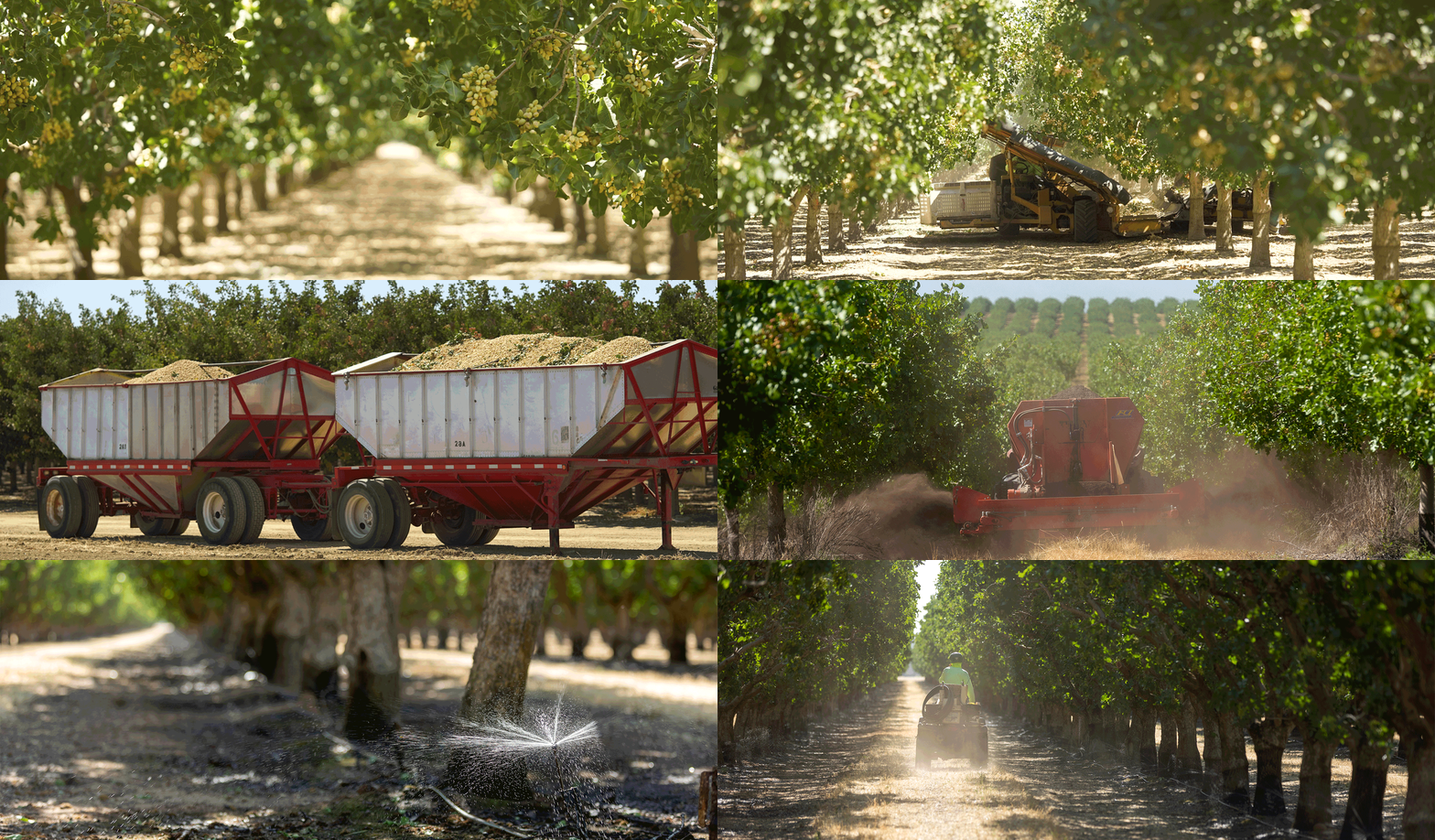
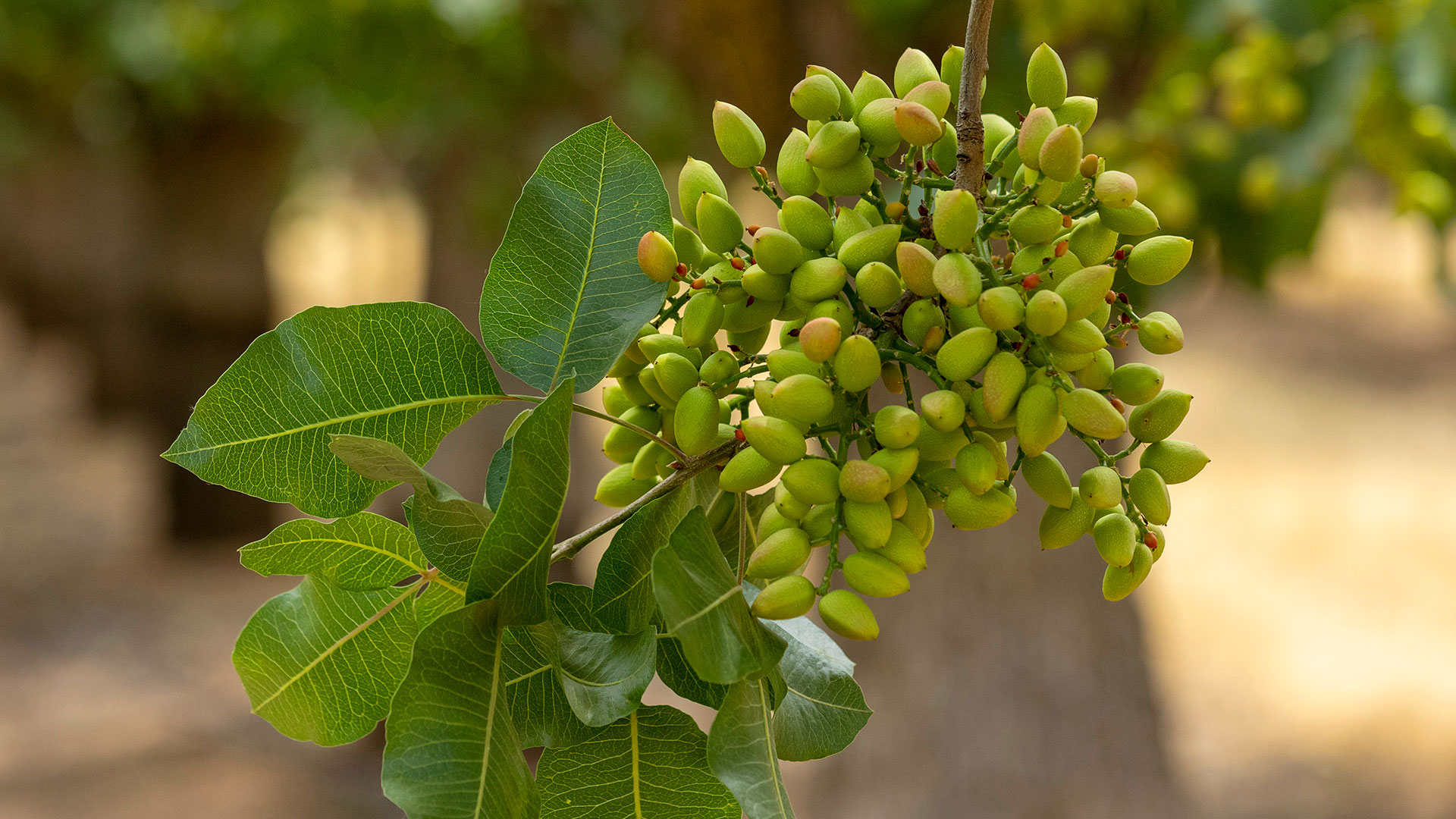
Pistachios thrive in California’s hot summers and cool winters, producing a high-quality crop when managed with precision and care. Today’s growers combine experience with technology to make smart, efficient decisions throughout the season.
How Pistachios Are Grown
Water management
To be responsible stewards of water resources, irrigation is carefully scheduled based on crop demand to maximize efficiency.Soil health
Healthy soils improve water use, nutrient availability, and overall productivity.Plant Nutrition
Fertilizer programs are designed to increase yield and avoid waste.Pruning
Trees are shaped to improve light, airflow, and yield potential.Pest management
Monitoring and targeted practices protect the crop from pests and disease, while minimizing inputs and protecting the environment.Technology
Sensors, weather data, and imagery help guide decisions for water management, soil health, plant nutrition, and pest management in real time.
At every step, growers focus on what matters most—producing a reliable, high-quality crop efficiently and sustainably.
Harvesting Pistachios
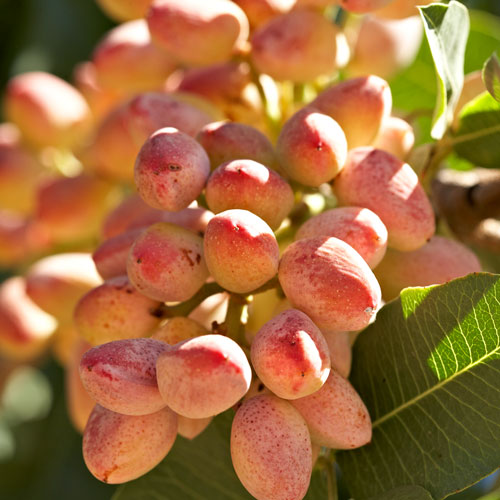
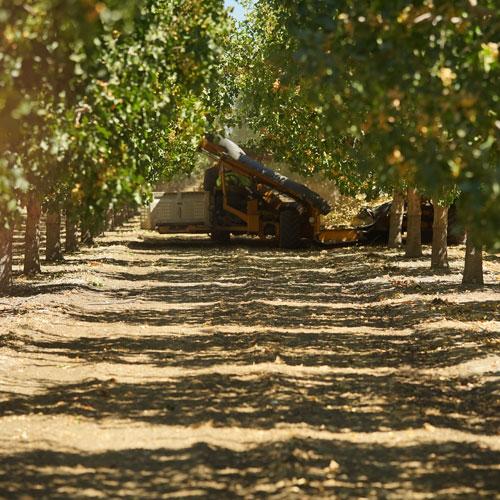
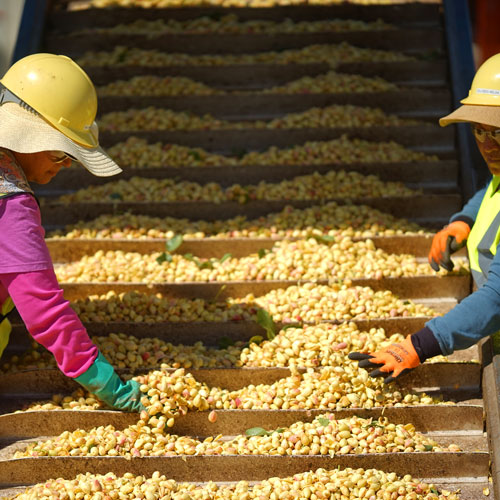
Harvest is when everything comes together. Timing and efficiency are critical to protecting both yield and quality. Pistachios are harvested when the hull, the soft outer layer, naturally separates from the shell—an indicator that the nuts are ready.
How Harvest Works
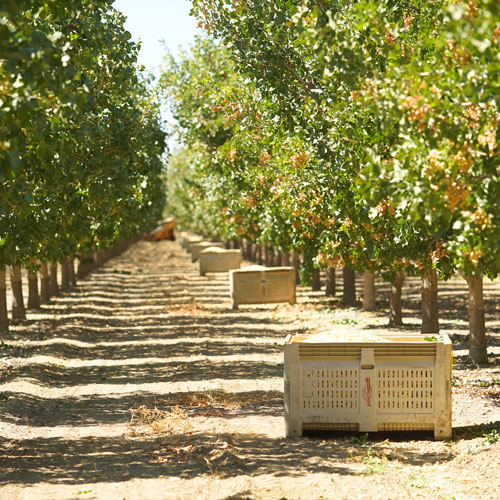
- Mechanical shaking removes nuts from the tree
- Catch systems prevent nuts from touching the ground
- Rapid processing removes hulls and begins drying
Why It Matters
- Harvest timing helps reduce pest damage and protect quality
- Faster harvest means better product and higher value
- Well-managed orchards are easier and more efficient to harvest
Modern harvesting is designed to be fast, precise, and efficient, ensuring pistachios reach consumers at the highest quality.